







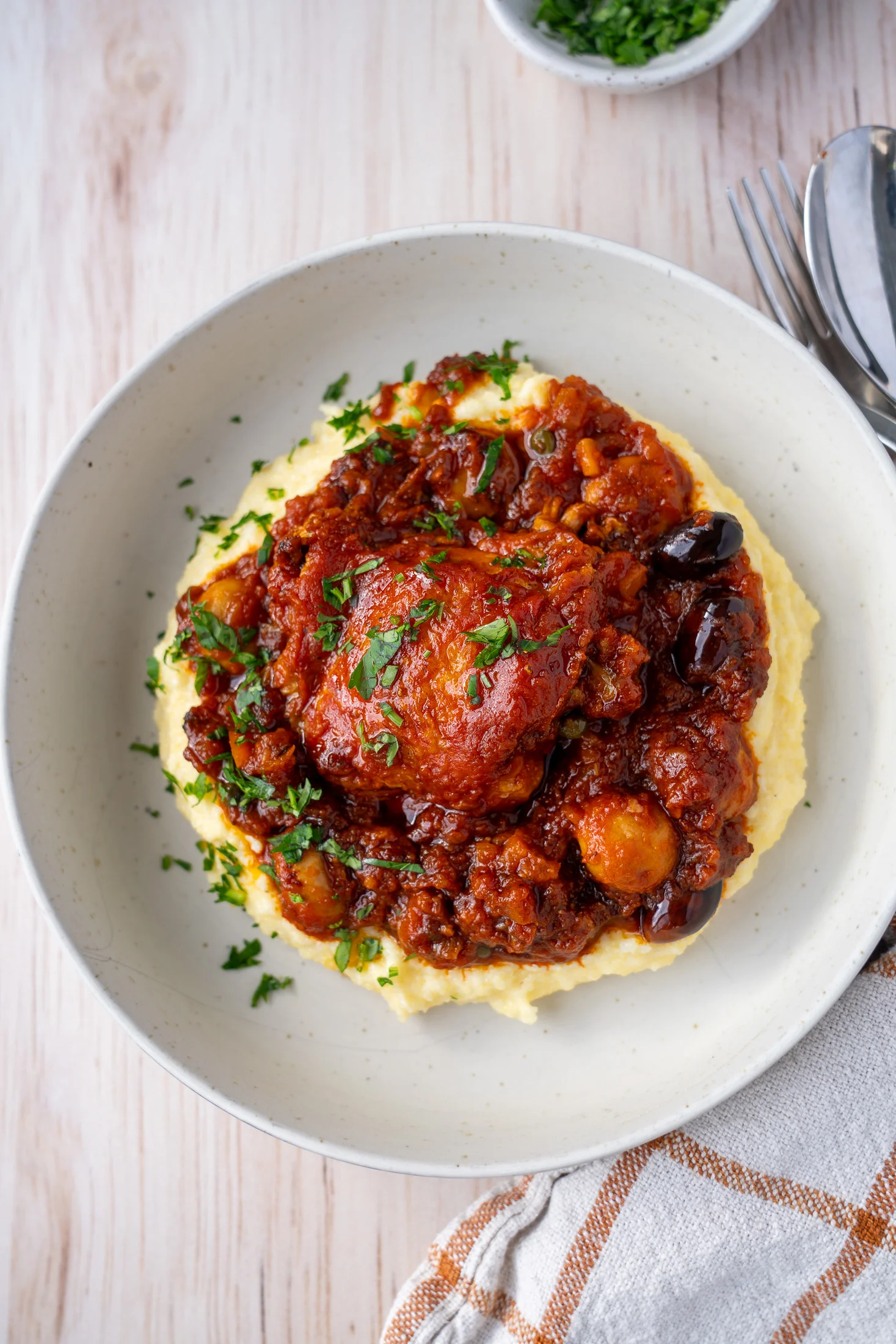
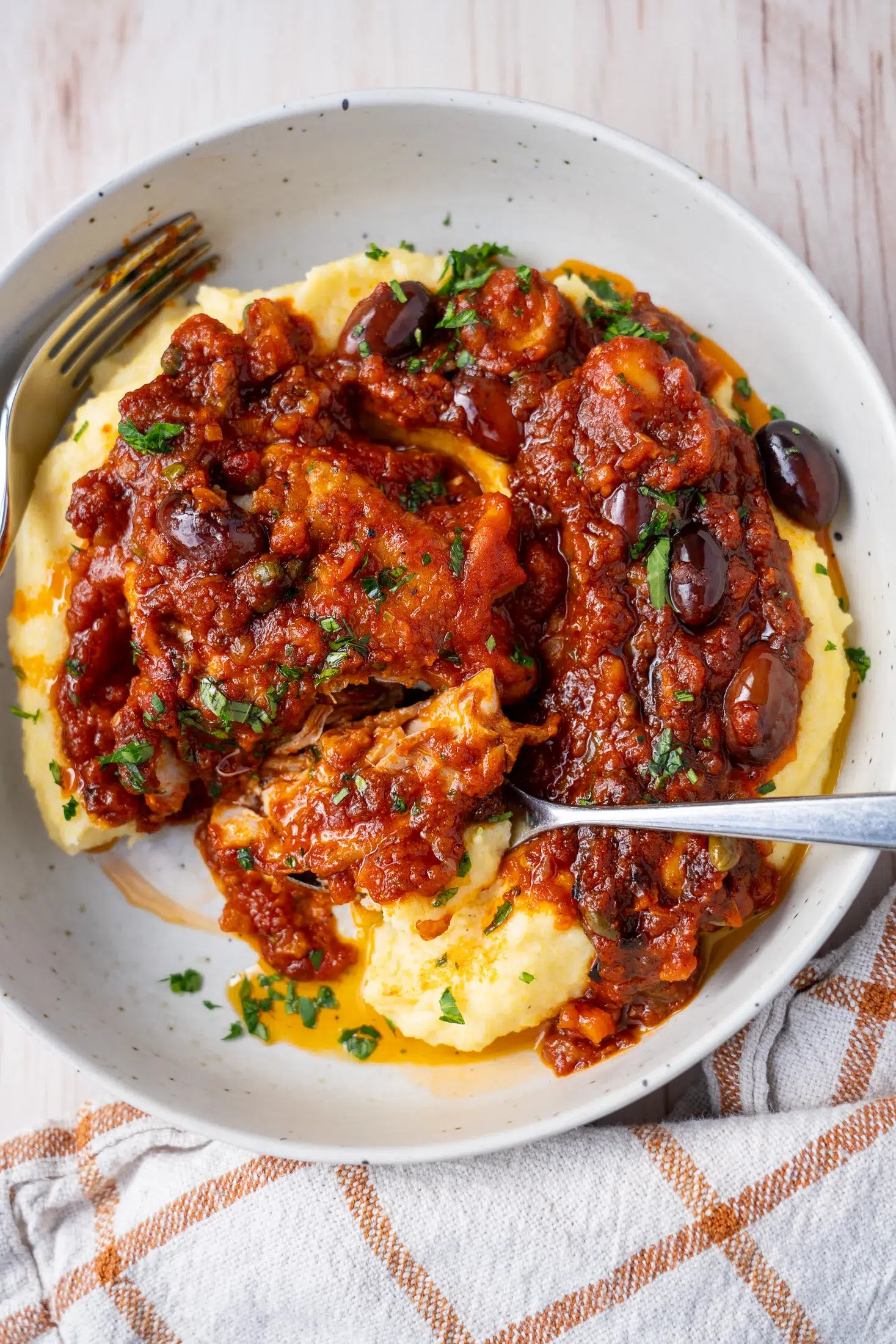
Slow-simmered chicken cacciatore with rich tomato sauce, olives and mushrooms served over creamy parmesan polenta. Comfort food that feels special without being complicated.
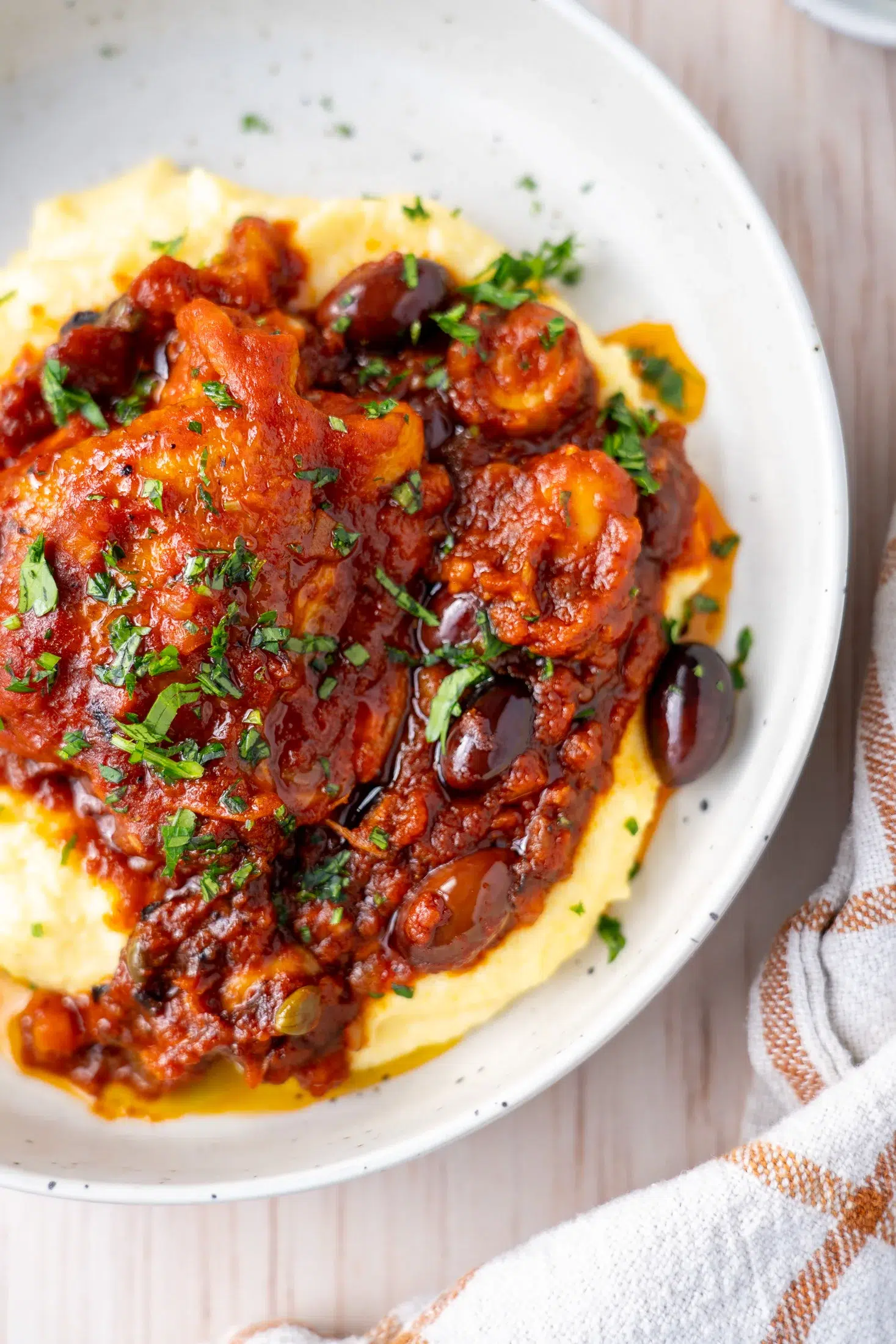
This is the kind of dinner that belongs in a little Italian restaurant with dim lighting and a glass of red wine … except you’re standing in your kitchen wearing track pants. My favourite kinds of meals are the ones that feel a little fancy without requiring a huge amount of effort or complicated ingredients.
I know there are a million chicken cacciatore recipes out there, but what I love about this version is how adaptable it is. Don’t love olives? No worries. Want to leave out the mushrooms? Go for it. The tomato-based sauce is rich and deeply flavour-packed thanks to the slow-cooked vegetables and tender chicken simmering away together, so you really don’t need a lot more for it to taste incredible – everything else is just a bonus.
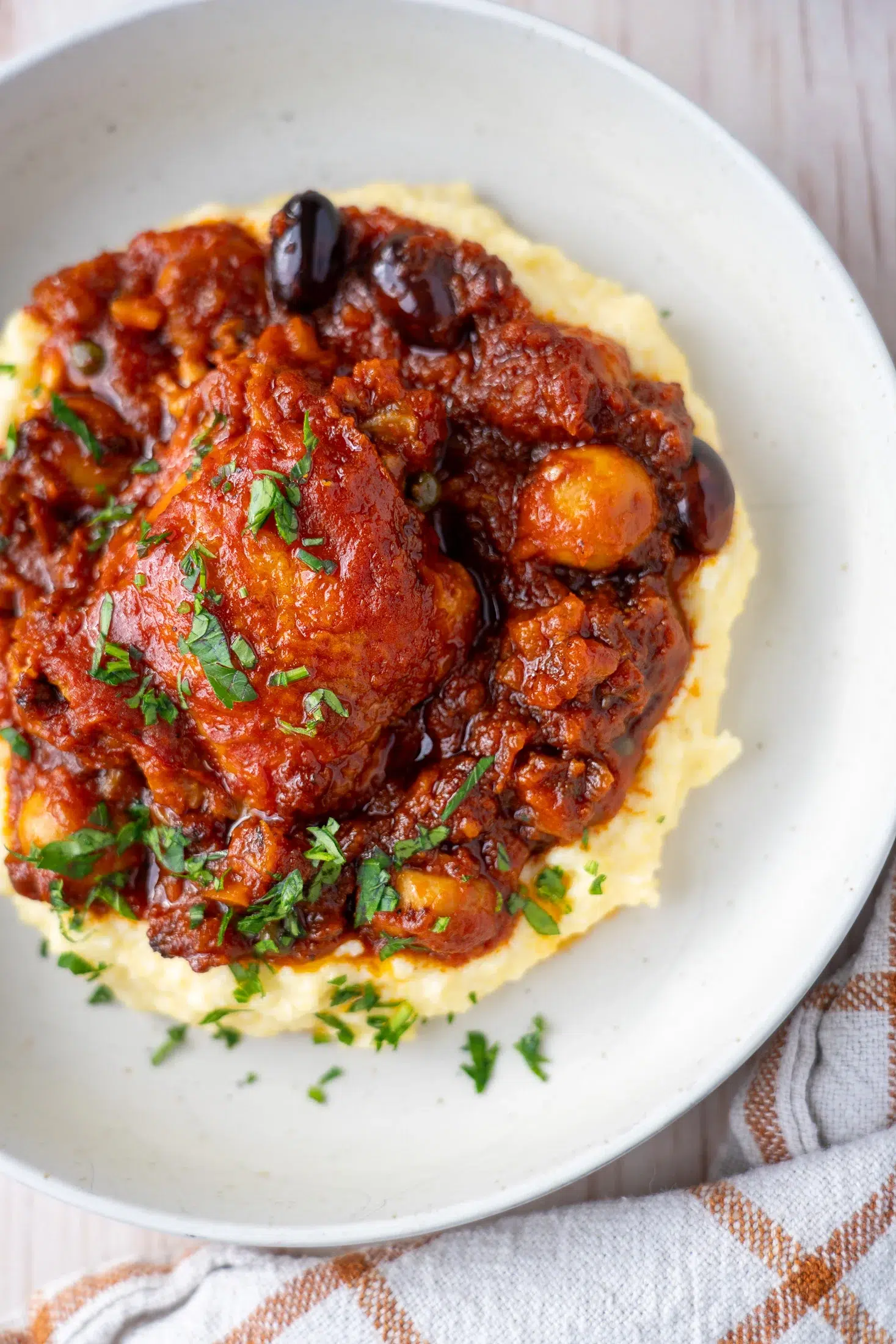
Don’t be thrown by the cooking time. Chicken Cacciatore takes just over an hour for the chicken to become meltingly tender, but after a little chopping and browning at the beginning, the stove quietly takes over and does most of the work. It’s a very simple recipe and as it simmers low and slow, the more delicious it becomes.
It’s also one of those recipes that tastes even better the next day. Refrigerate it, freeze it for when you need it, or simply enjoy it immediately! I love serving it with creamy parmesan polenta, but it works just as well with mashed potatoes, rice, crusty bread, a mixed leaf salad or steamed greens. This comforting, family-friendly recipe is the kind that reminds me why I love cooking and eating at home!
What can I serve with Chicken Cacciatore instead of polenta?
Mashed potatoes, rice, crusty bread, steamed greens or a simple mixed leaf salad all work beautifully. The sauce is rich and full of flavour, so anything that helps soak it up is a good idea.
Can I leave out the olives or mushrooms?
Absolutely. This recipe is very adaptable. The sauce still tastes rich and delicious without them, so feel free to make it work for your family.
What other vegetables can I add?
You can absolutely use what you have. Capsicum (bell peppers), zucchini (courgettes), spinach, silverbeet (Swiss chard), green beans or even a handful of baby kale all work well. Add firmer vegetables, such as capsicum, with the onion, carrot and celery. Add leafy greens towards the end of cooking (in the last 5–10 minutes) so they don’t overcook.
Can I use boneless, skinless chicken thighs?
You sure can. My preference is bone-in for the flavour, but boneless chicken thighs work beautifully too. Reduce the simmering time to 20–25 minutes, or cook until the chicken is tender and the sauce has thickened. You won’t get quite the same depth of flavour that bone-in chicken provides, but it’s still incredibly delicious and a great option if you prefer boneless cuts or want a slightly faster cook time.
If you enjoyed this Chicken Cacciatore, I think you’ll love:
- Slow-cooked Beef and Mushroom Ragu Recipe – Rich, slow-simmered and deeply savoury with the same cosy, comfort-food feel and beautiful depth of flavour.
- Chicken Paprikash Recipe – Another comforting stovetop chicken dinner with a rich sauce that’s perfect served over creamy polenta or mashed potato.
- Chicken Stroganoff Recipe – A creamy mushroom-filled chicken dinner that’s simple enough for weeknights but still feels comforting and satisfying.
- One-pan Baked Chicken and Gravy Recipe – Crispy-skinned chicken in a rich gravy with minimal effort and maximum comfort-food energy.
- Slow-cooked Beef Stroganoff Recipe – The ultimate low-effort comfort dinner with melt-in-your-mouth beef and a rich creamy sauce.
Chicken Cacciatore
“This chicken cacciatore recipe is 100% tastier than the recipe I have used in the past. Served it with rice and greens and it was delicious!” Share Pin Recipe PrintIngredients
- 8 bone-in, skin-on chicken thigh cutlets (see note 1 for boneless thighs)
- 1½ tsp sea salt flakes, plus extra to taste
- ½ tsp freshly cracked black pepper, plus extra to taste
- 2 tbsp olive oil
- 1 brown onion, finely diced
- 1 carrot, finely diced
- 1 celery stalk, finely diced
- 200 g (7 oz) baby mushrooms
- 1 tbsp freshly minced garlic
- 2 tbsp tomato paste
- 125 ml (½ cup) dry white or red wine (optional)
- 700 g (24 oz) passata
- 250 ml (1 cup) chicken stock
- 1 tsp dried oregano
- 4 fresh thyme sprigs
- 2 bay leaves
- 80 g (½ cup) olives (kalamata or green), pitted
- 1 tbsp capers
- Finely chopped fresh flat-leaf parsley, to serve
- 1 litre (4 cups) chicken stock or water
- 40 g (1½ oz) unsalted butter
- 150 g (1 cup) instant polenta
- 75 g (¾ cup) finely grated parmesan
- 60 ml (¼ cup) thickened (whipping/heavy) cream
- 375 ml (1½ cups) warm full-cream (whole) milk (optional)
- Sea salt flakes, to taste
- Freshly cracked black pepper, to taste
Instructions
- Season the chicken – Season the chicken generously all over with the salt and pepper.
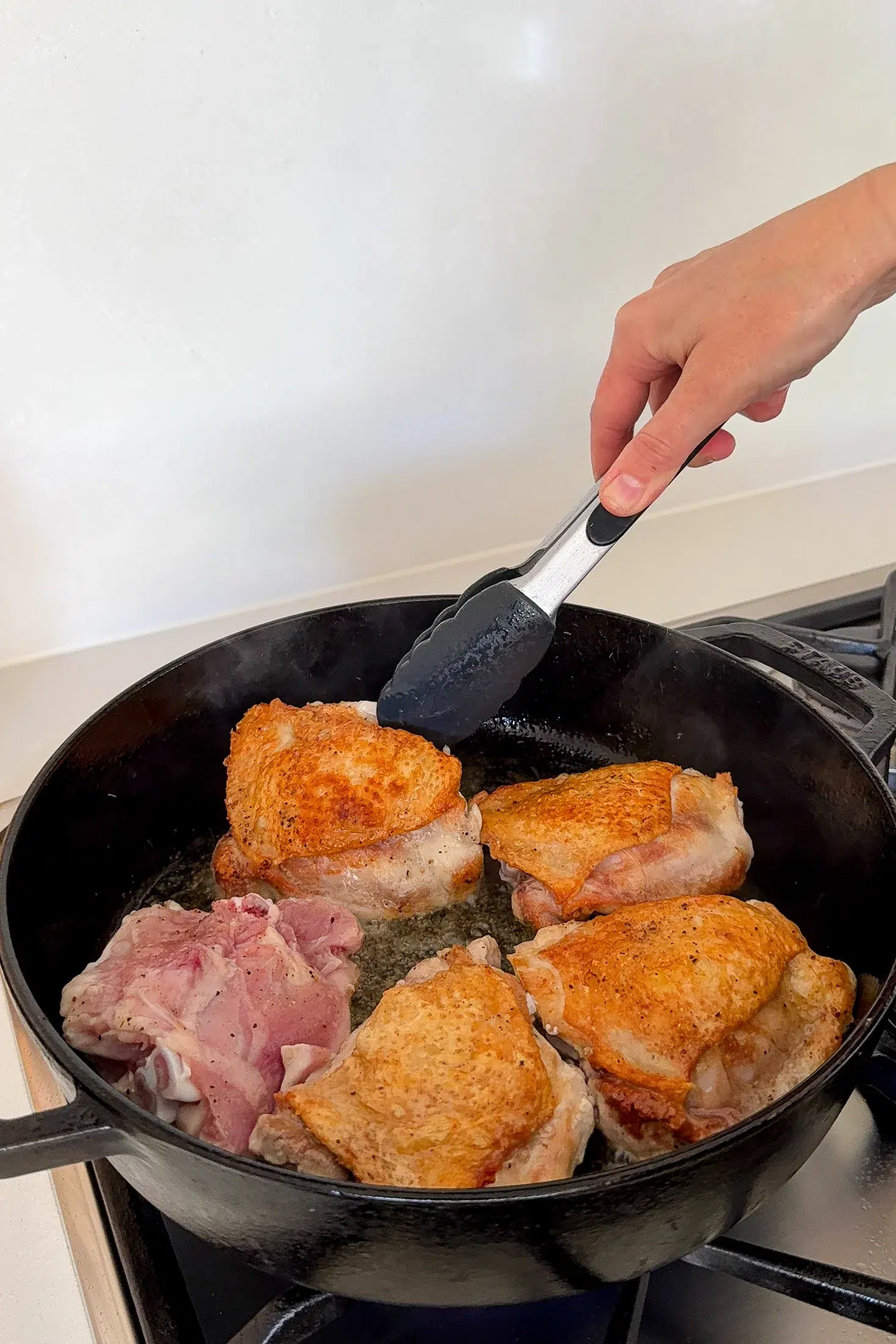
- Brown the chicken – Heat the olive oil in a large deep heavy-based pan or shallow casserole dish with a lid over medium–high heat. Cook the chicken skin-side down (if using skin-on cutlets) for 6–8 minutes, or until deeply golden and crisp. Turn and cook for a further 2–3 minutes. (The chicken does not need to be cooked through at this stage.) Remove from the pan and set aside on a plate.
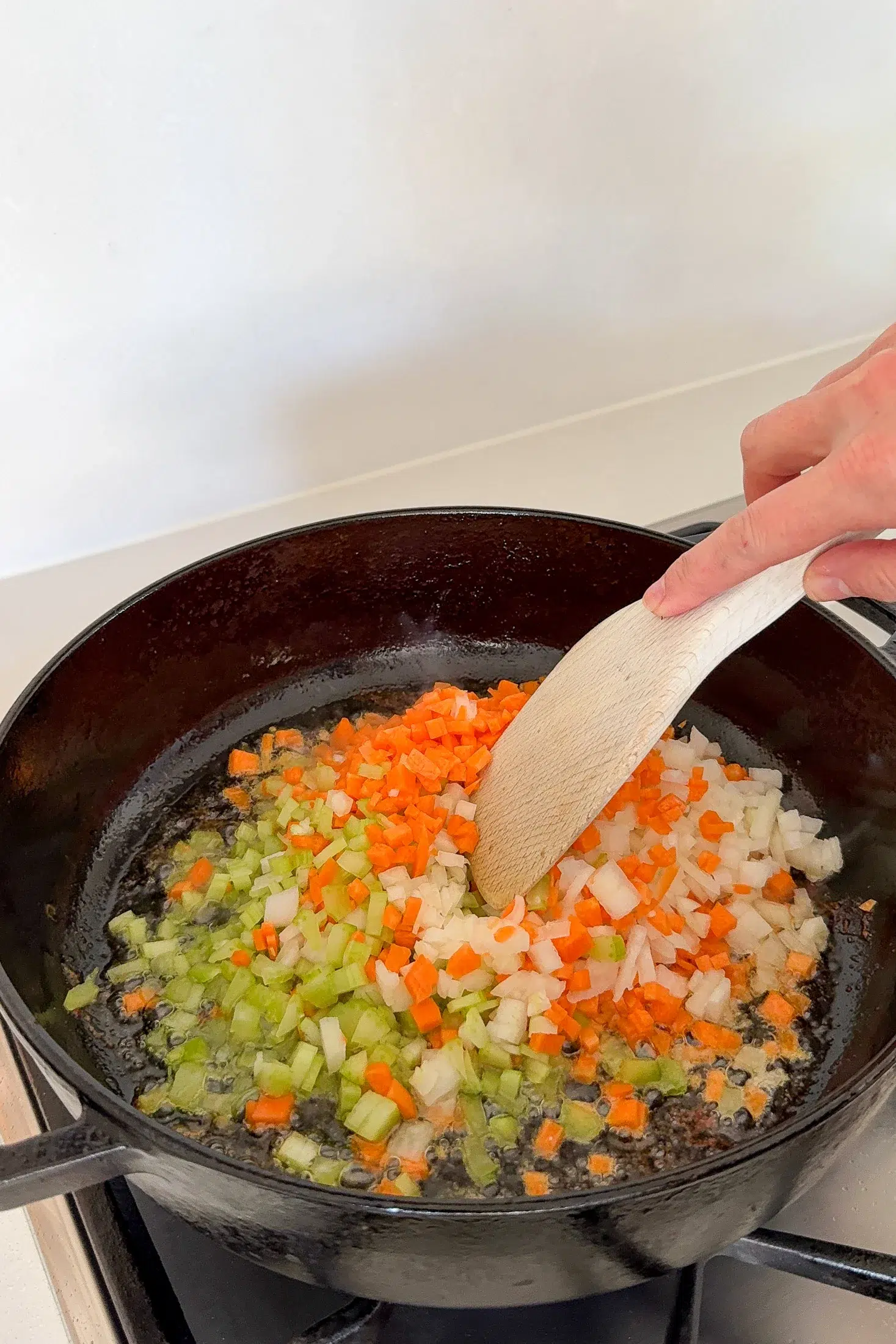
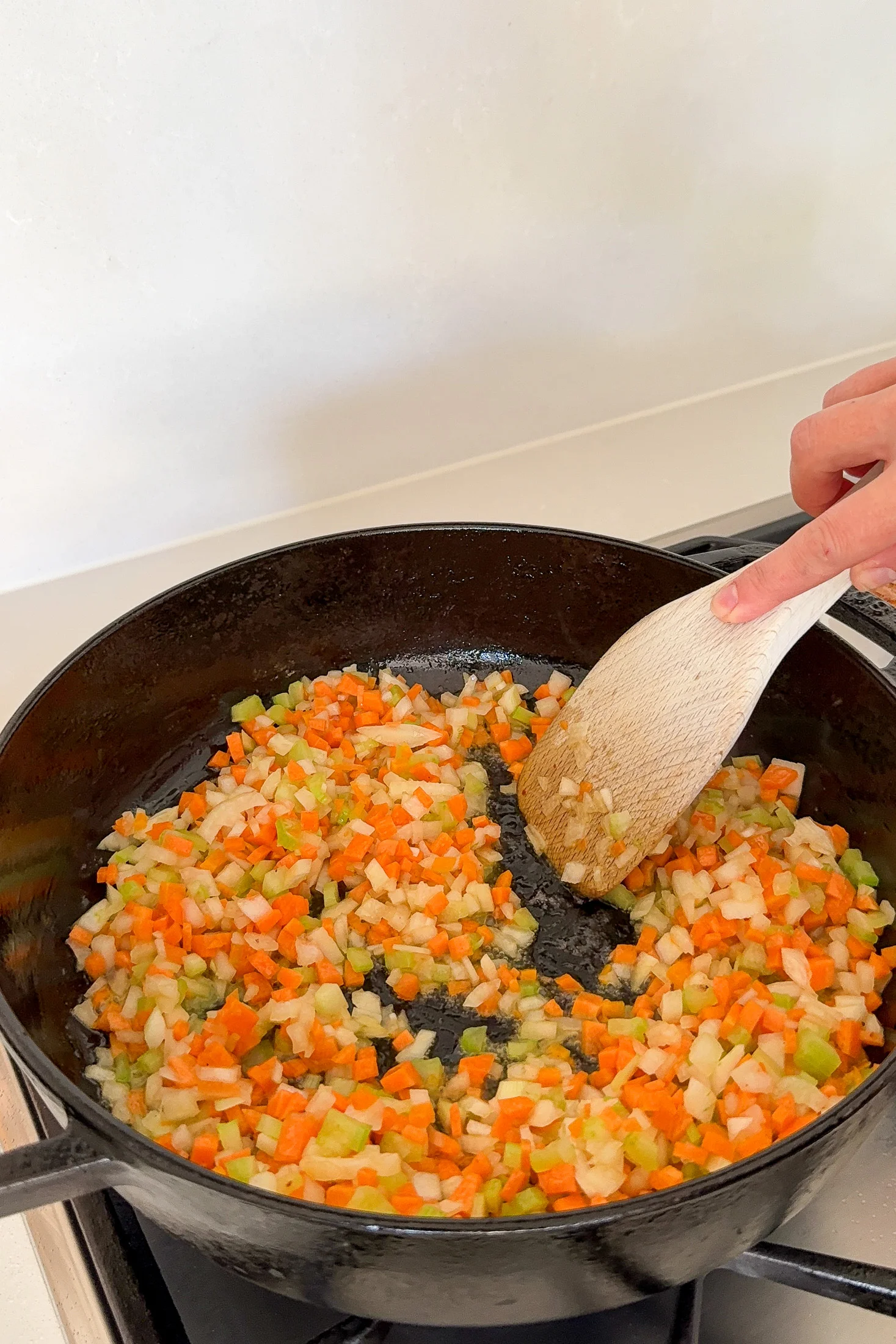
- Cook the base vegetables – Reduce the heat to medium–low. Add the onion, carrot and celery. Cook, stirring occasionally, for 6–8 minutes, or until softened and beginning to melt into the pan.
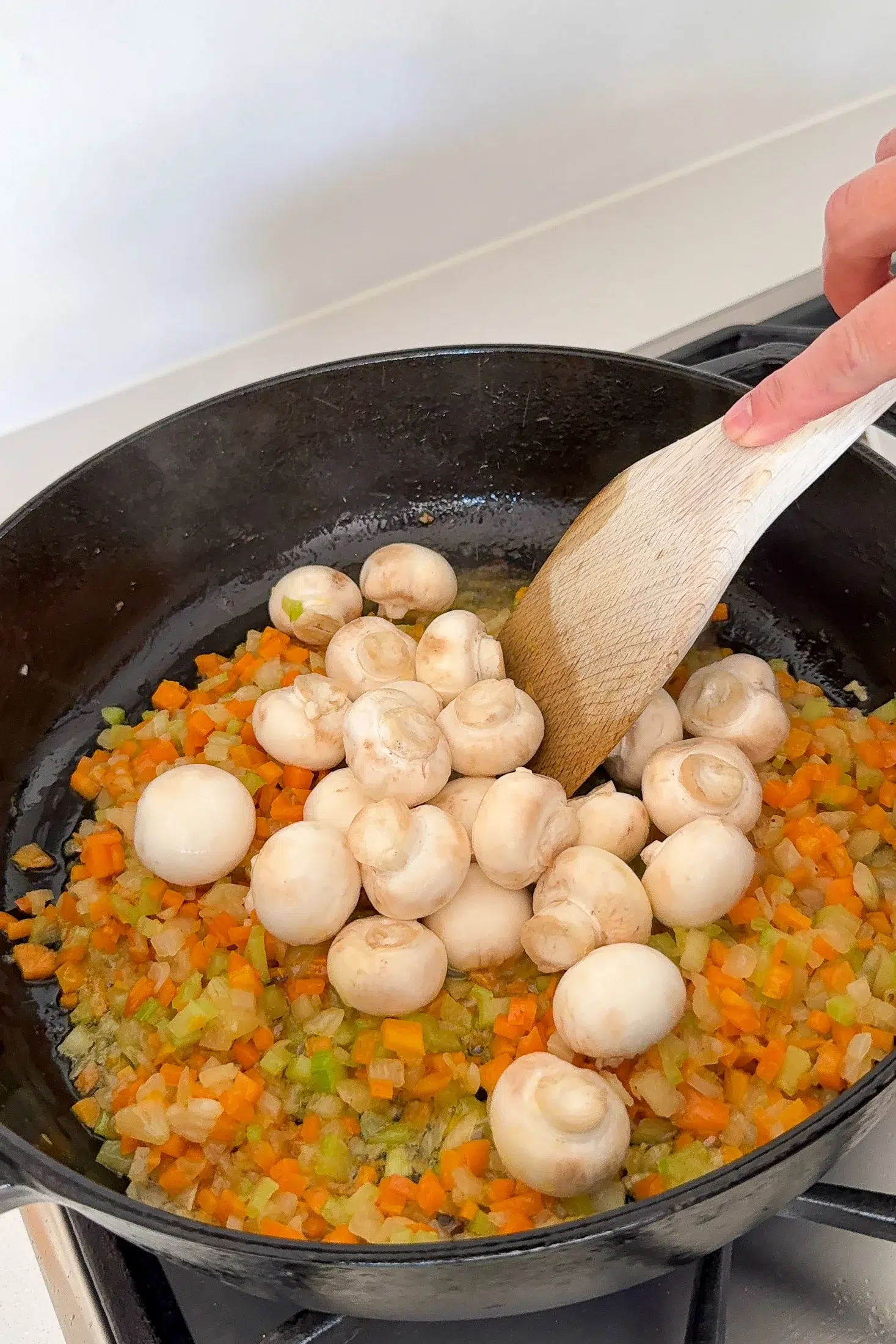
- Add the mushrooms – Add the mushrooms and cook for 4–5 minutes, stirring occasionally, until lightly golden and softened.
- Add the garlic and tomato paste – Add the garlic and tomato paste and cook, stirring continuously, for 1–2 minutes, or until fragrant and the tomato paste darkens slightly in colour.
- Build the sauce – Pour in the wine, if using, and simmer for 2 minutes, scraping up any caramelised bits from the bottom of the pan. Add the passata, chicken stock, oregano, thyme and bay leaves. Fill the empty passata bottle or jar with 250 ml (1 cup) of water, shake well, then pour into the sauce. Stir to combine and bring to a gentle simmer.
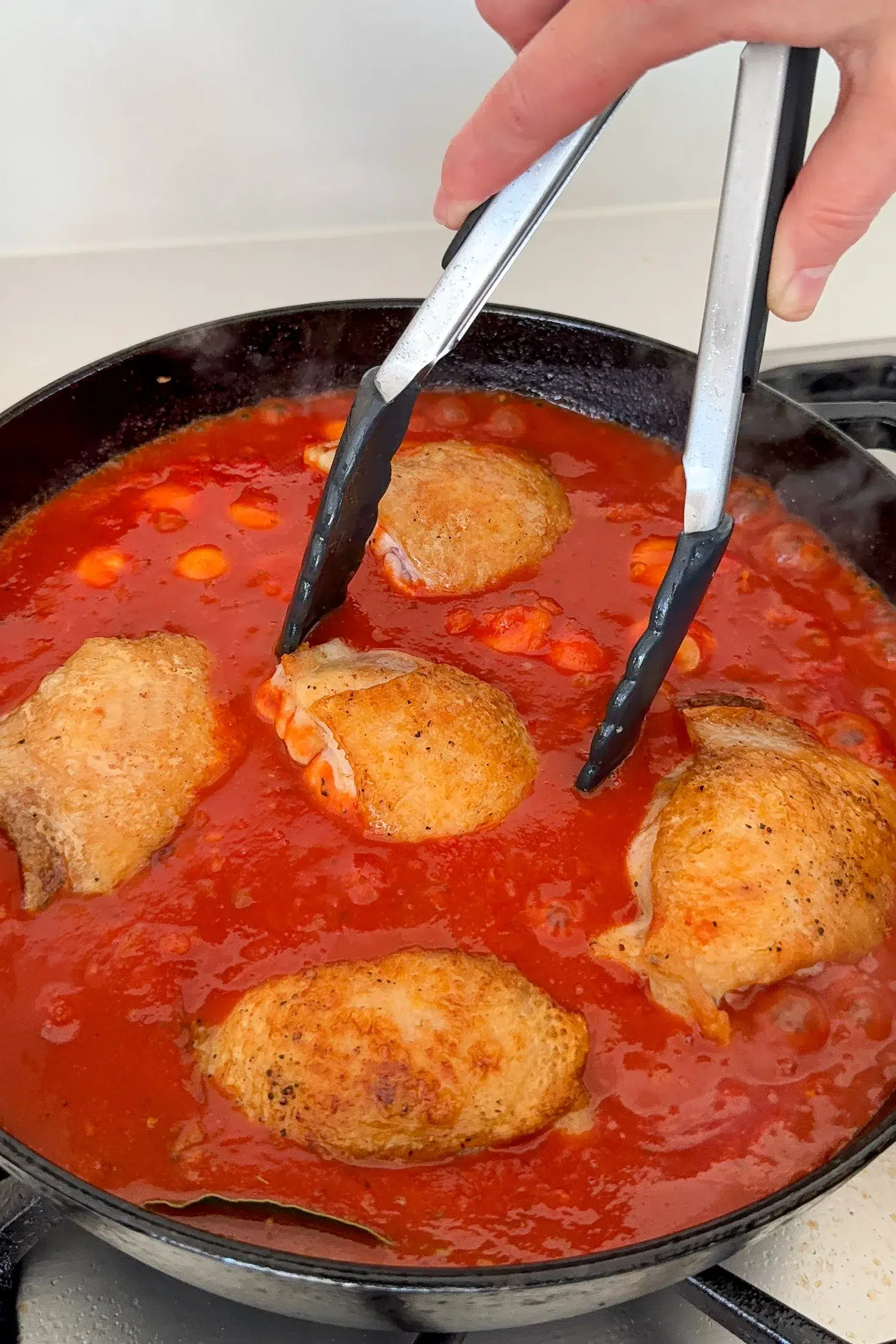
- Simmer the chicken – Return the chicken to the pan, skin-side up (if using skin-on cutlets), along with any resting juices. Cover with a lid, reduce the heat to low and simmer gently for 1 hour, turning the chicken once, or until the chicken is extremely tender and beginning to fall away from the bone. Add 125 ml (½ cup) of water as needed if the sauce starts to stick to the base of the pan. The chicken is ready when it can be pulled apart easily with two forks, if not, continue cooking.
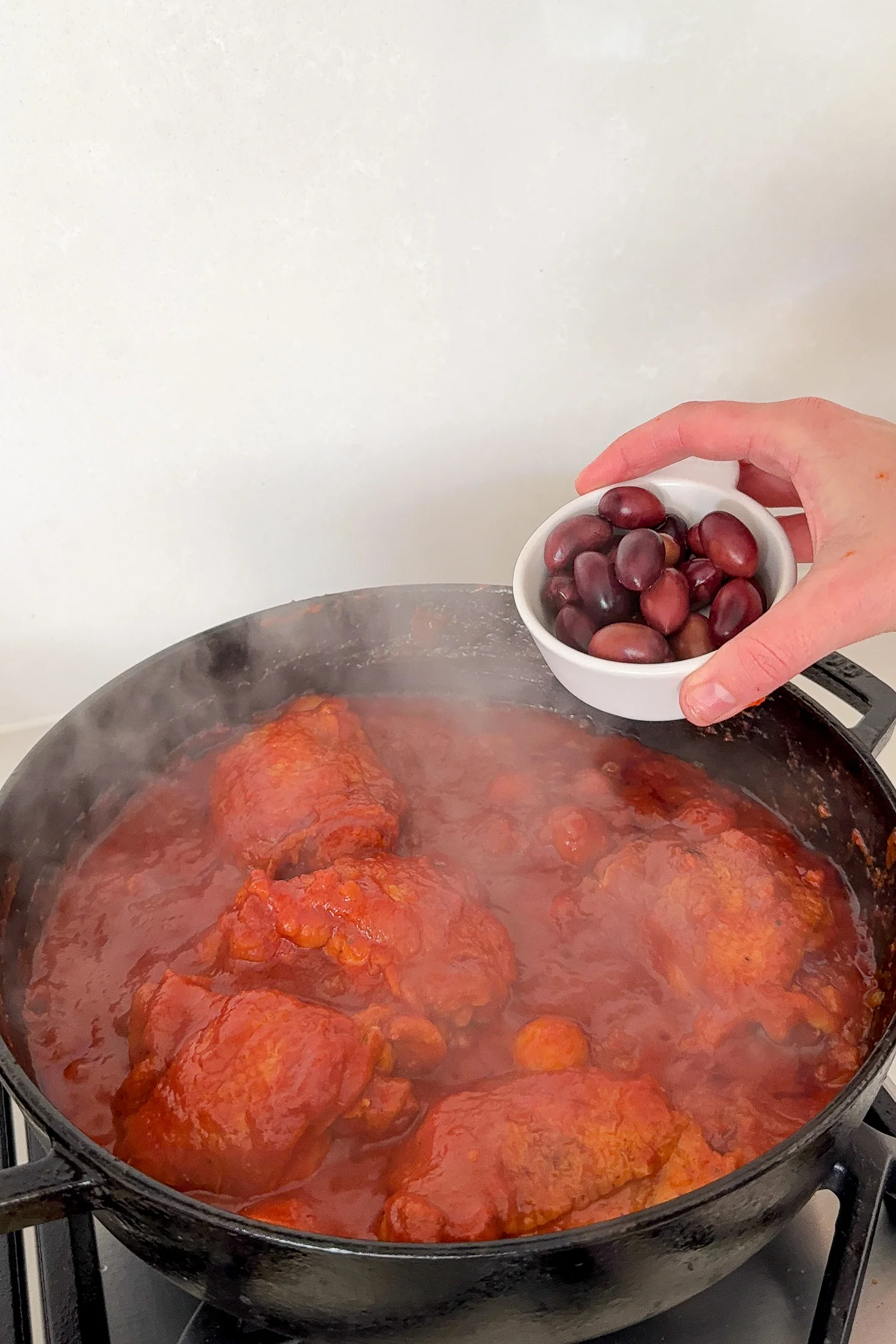
- Reduce the sauce – Remove the lid, add the olives and capers, and cook for a further 15 minutes, skin-side up, allowing the sauce to reduce and thicken slightly. Taste and adjust the seasoning if needed. Remove the bay leaves and thyme sprigs.
- Make the creamy parmesan polenta – Towards the end of the cooking time, place the chicken stock or water in a medium saucepan over medium heat and bring to a gentle boil. Gradually whisk in the polenta in a steady stream to prevent lumps forming. Reduce the heat to low and cook, stirring with a spoon regularly, for 5–6 minutes or until thick and creamy. Add the butter, parmesan and cream, stirring until melted and smooth. If you prefer a looser polenta, gradually whisk in the warmed milk until your desired consistency is reached. Season with salt and pepper.
- Serve – Spoon the creamy parmesan polenta into bowls and top with the chicken cacciatore and plenty of sauce. Finish with fresh parsley to serve.
Nutrition information
Disclaimer re gluten-free and dairy-free recipes
Watch how to make it
Recipe notes
Make Ahead
This is one of those recipes that tastes even better the next day, making it perfect for easy entertaining. The sauce deepens in flavour overnight and the chicken becomes even more tender. You can prepare the entire chicken cacciatore up to 3 days ahead and refrigerate in an airtight container. Reheat gently on the stovetop over low heat or in the microwave until piping hot. Polenta is best made fresh, when it’s silky, smooth and soft. If you do need to make it ahead, see the Leftovers instructions below.Leftovers
Refrigerate leftover chicken cacciatore for up to 3 days in an airtight container, or freeze for up to 3 months. Thaw completely overnight in the fridge before reheating. Reheat gently on the stovetop over low heat or in the microwave until heated through. Add a splash of water or stock if the sauce has thickened too much during storage. Leftover polenta will firm significantly once chilled but can be refrigerated in an airtight container for up to 3 days. Reheat in a saucepan or microwave with extra milk, water or stock, stirring well until smooth and creamy again.Tried this recipe?
Let us know how it was!Thank you to Jessica Brook for your help developing this recipe.























Jess says:
Can this be down in a slow cooker? Looks delicious
Nicole says:
Hi Jess! 😊 I haven’t tested a slow-cooker version of this one yet, so I can’t confidently recommend timings or any adjustments to the recipe. But I think it’s a fantastic idea and it’s definitely one I’d love to develop in the future! I’ll add it to my list to test. Sorry I couldn’t be more help! ❤️ Nic x
Jess P says:
Delicious! Cooked it on a sunday for dinner during the week. Served it with mashed potato 🤌🏼
Anna Miller says:
This chicken cacciatore recipe is 100% tastier than the recipe from a well-known chef that I have used in the past. From now on this is the only recipe I am going to use! Served it with rice and greens and it was delicious! Am adding this to my weekly menu plan.😊
Sonia says:
This recipe is so good! Just need to know when you add the olives and capers as I couldn’t see it in the method.
Nicole says:
Thank you so much Sonia I am so happy you enjoyed the recipe! That was completely my error… I left out the main event! Haha! I have now added the olives and capers to the method. Thank you so much for letting me know x
Selm says:
Hi, the recipe says 1tbsp of capers. But I can’t seem to see in the instructions when to add them?
Nicole says:
Apologies Selm, I accidentally left this important instruction out of the recipe! It has now been fixed, thanks so much for your message. 🥰